
A home that is affordable to one Nashvillian may be out of reach for another. So how do we determine what affordable housing actually means?
Area Median Income (AMI) is one of the most common tools used to measure housing affordability and determine eligibility for housing assistance. Understanding AMI helps explain who affordable housing programs serve, how housing costs are evaluated, and why Nashville needs homes at a range of price points.
What is AMI?
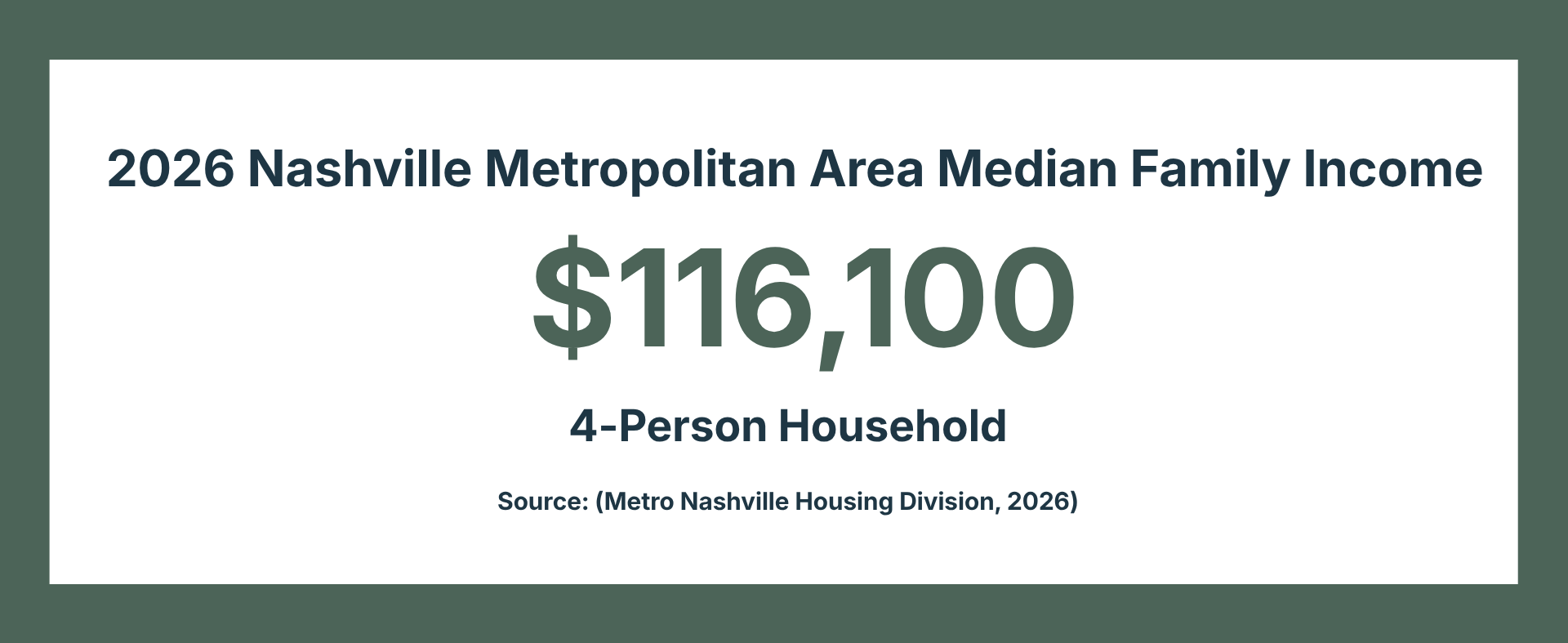
Area Median Income is a benchmark based on the median family income in a geographic area. The median is the midpoint: half of families earn more, and half earn less.
The U.S. Department of Housing and Urban Development (HUD) uses AMI to establish income limits for housing programs. These limits vary by household size and are updated annually.
How is AMI used?
Housing programs use percentages of AMI to identify the income levels they serve. To be eligible for a housing program, a household earning 30% AMI, for example, has a different income limit than one earning 80% AMI.
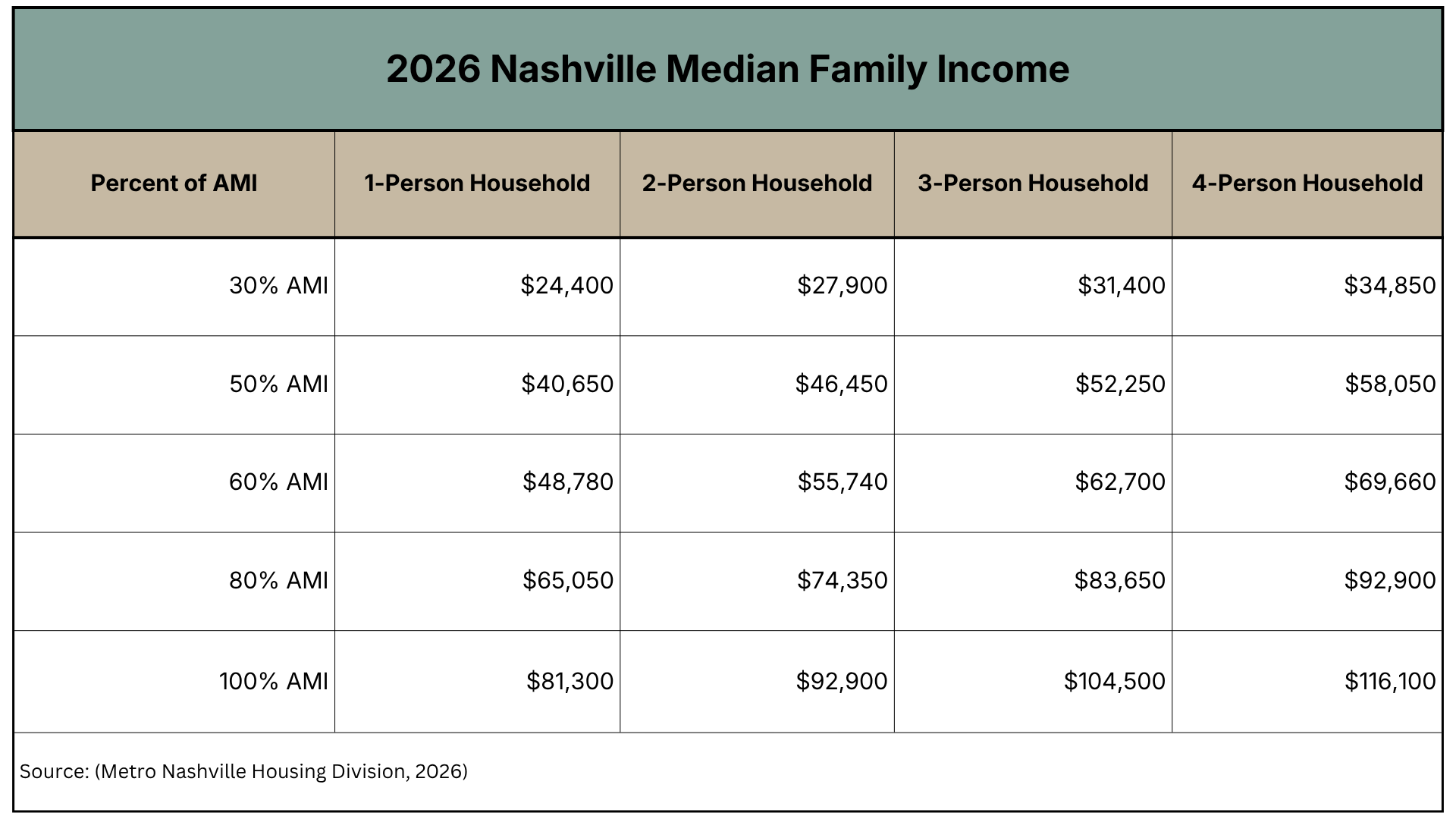
Household size matters. A single person and a family of four earning the same amount may fall into different AMI categories because income limits account for household size.
How does Nashville define affordable and workforce housing?
The word “affordable” can mean different things depending on the context. Generally, housing is considered affordable when a household spends no more than 30% of its gross income on housing costs, including utilities.
However, Tennessee law makes an additional distinction between affordable housing and workforce housing when Metro Nashville allocates certain public funds for these purposes.
Affordable housing: Intended for households earning 60% AMI or less.
Workforce housing: Intended for households earning more than 60%, but no more than 120% AMI.
Under these definitions, housing costs must meet a 30% affordability standard based on the applicable income level, with adjustments for household size (Metro Nashville Housing Division, 2026).
For a four-person household in Nashville, the 2026 income limits provide a useful example: A household earning up to $69,660 falls within the 60% AMI threshold for affordable housing. Workforce housing serves a higher income range, extending up to 120% AMI, subject to applicable program calculations.
Why does this distinction matter? Different households face different affordability challenges. Some need substantial financial assistance, while others earn too much to qualify for certain programs but still struggle to afford homes near their jobs, families, and communities.
These definitions help determine which households public housing investments are intended to serve. They do not mean that every home labeled workforce housing is affordable to every working household.
What makes housing affordable?
Housing is generally considered affordable when a household spends no more than 30% of gross income on housing costs. Households spending more than 30% are considered cost-burdened, while those spending more than 50% are severely cost-burdened (Harvard JCHS, 2025).
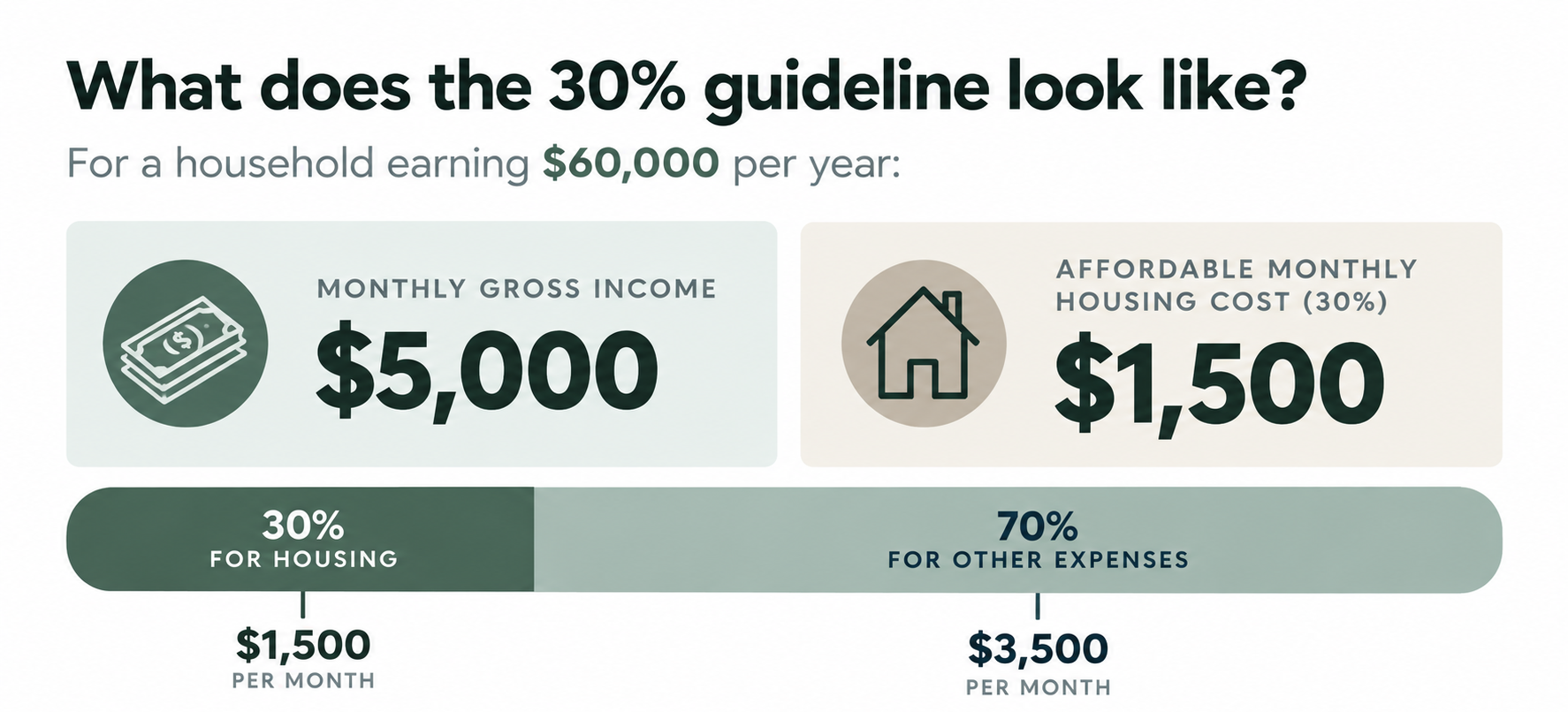
But the 30% guideline doesn't capture every household's financial reality. Childcare, transportation, healthcare, and other expenses can affect what a family can realistically afford.
What does AMI mean for Nashville workers?
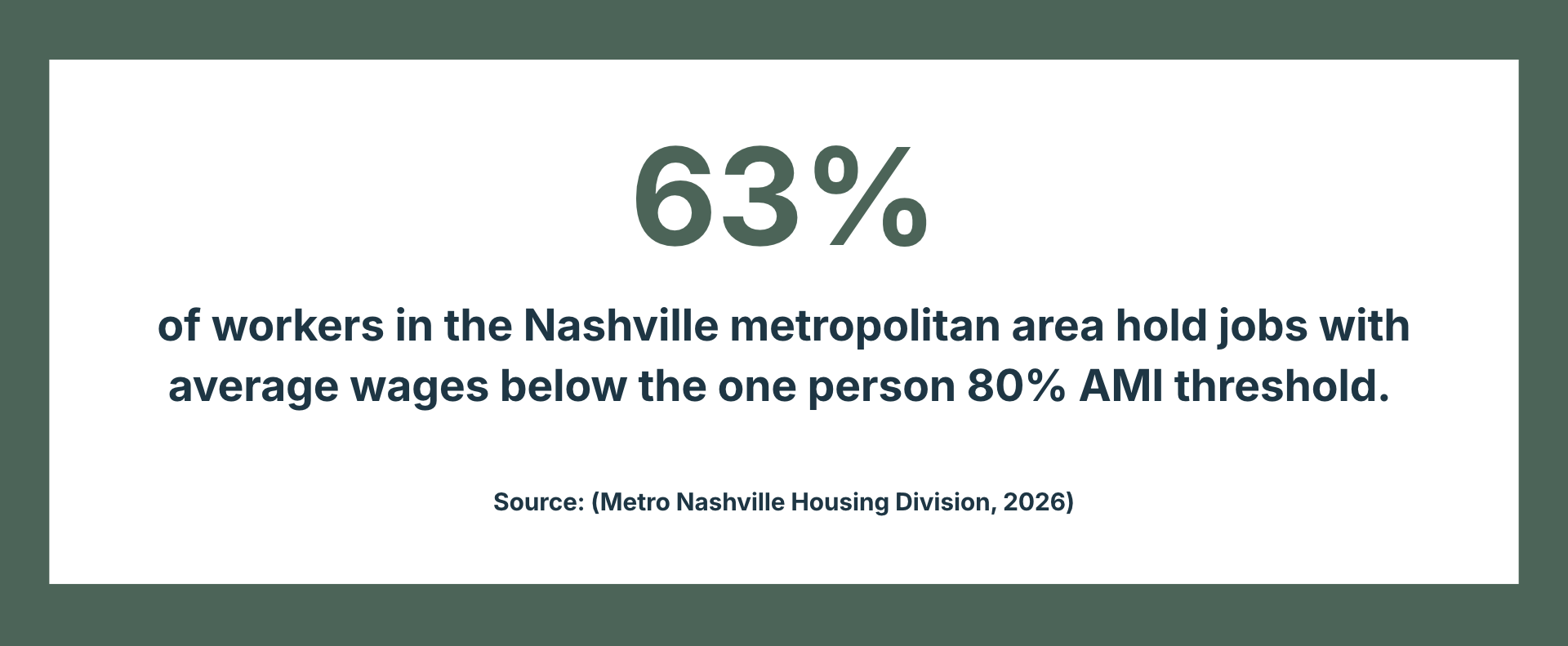
Metro Nashville's 2026 affordable housing guide compares the wages of common local occupations with what those workers could afford to spend on housing.
For example, the guide estimates that a retail salesperson earning $37,031 annually could afford approximately $926 per month in housing costs. A licensed practical nurse earning $61,223 could afford approximately $1,531 per month (Metro Nashville Housing Division, 2026).
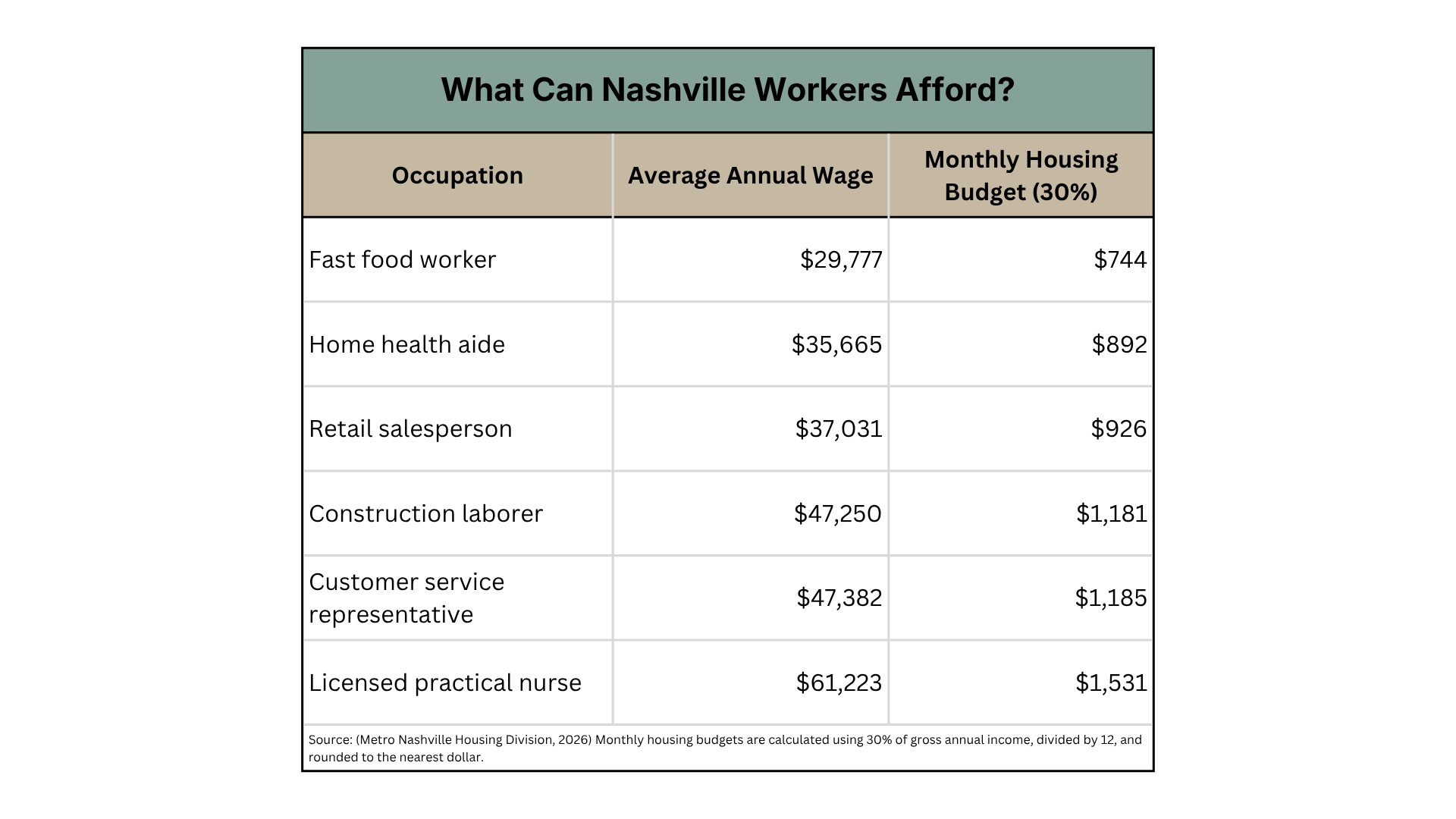
These examples show why affordability isn't only a concern for households with the lowest incomes. Workers across a range of occupations may struggle to find housing that fits their budgets.
Why does AMI matter for Nashville's housing needs?
Nashville's 2025 Unified Housing Study found that approximately 49% of renter households and 22% of homeowner households were housing cost-burdened in 2023 (Metro Nashville, 2025).
But affordability isn't just about income. A household may qualify for assistance and still be unable to find an available home of the right size, in a suitable location, at a price it can afford.
Imagine a family looking for a home close to work and loved ones. They need three or four bedrooms and can afford $2,000 a month, but the only new apartments nearby have two bedrooms and rent for $3,000.
Those apartments add housing supply, but they don't give this family a realistic option.
This is why Nashville needs to consider housing supply alongside household incomes, housing types, sizes, and locations.
The Takeaway
AMI helps us understand who affordable housing programs are designed to serve, but it doesn't tell us everything about what Nashvillians can afford.
Building more homes matters, but so does building homes that fit people's needs and budgets. Understanding how incomes, housing costs, and household needs intersect helps Nashville make more informed decisions about its housing future.
Sources & further reading
Metro Nashville. (2025). Unified Housing Strategy. Full report.
Metro Nashville. (2026). What Is Affordable Housing? Income limits guide.
U.S. Department of Housing and Urban Development. (2026). FY2026 Income Limits. HUD data.
Harvard Joint Center for Housing Studies. (2026). The State of the Nation's Housing 2026. Report overview.